Choose a Hospital that Supports Breastfeeding!
Through my Lactation Certification course with The Healthy Children Project, I recently learned about the "Baby Friendly Facilities" label for birthing hospitals. Sounds funny, doesn't it - wouldn't every hospital be friendly to babies??
This is a label, similar to the USDA Organic label. It means the hospital has specific standards in place to support breastfeeding, like making sure the baby suckles within the first hour of birth - or in the event your baby is in the NICU, like our first was, helping you with hand expression.
You think breastfeeding is going to be easy, because it's natural. At least, that's what I assumed. Women have been doing this since the beginning of time; it will just blissfully happen, I thought.
Ha.
For some women, it is like that. The baby just latches. But for most, it's much trickier! There are so many technicalities to breastfeeding you would never know unless an expert showed you. In the past, women family members were the experts. But in our modern nuclear family units, often far from more experienced sisters and moms and aunts, AND after the baby formula craze, we don't have those experts around. After you give birth, you return home, and the next time you see your doctor is six weeks later.
(You DO see your baby's pediatrician, and if you picked one who supports breastfeeding, that really helps! If you didn't, you can still ask to see a lactation consultant! Many have them on site. Just have a lactation consultant watch a feeding in case there's a latching problem you're not seeing - trust me, it can only help!)
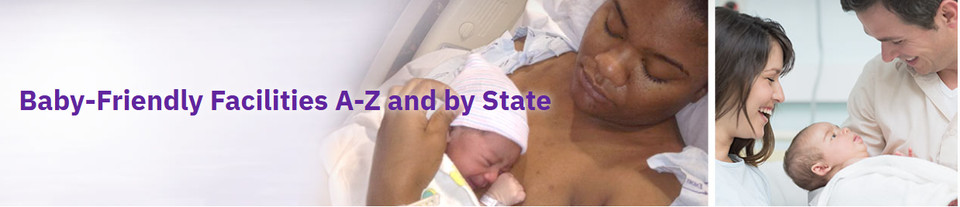
If you give birth in a Baby Friendly Hospital, they ensure you and your baby get skin-to-skin as soon as possible, and that the baby gets to suckle on your nipple. No pacifier, no bottle, no clothes in the way.
Why?
Right after the placenta comes out, your body is ready to produce milk - and you need to send it the message that yes, there's a baby here! That skin-to-skin triggers oxytocin, our hormone that gets the milk flowing. (It's actually referred to as "the love hormone.")
If you're already using a hospital that isn't "Baby Friendly," it's okay. You can just familiarize yourself with their practices and ask for those things. Write them down on a piece of paper or in your phone so that you can just hand that to the nurses or midwife when you walk in - that way you don't have to remember while you're busy giving birth.
We used South Shore Hospital in Weymouth, MA for our third birth. It is not a designated Baby-Friendly Facility (I didn't know about that label until later). But it was EXCELLENT. I opted for a midwife when we got there, and they followed the "Baby Friendly" practices of no pacifier, skin-to-skin right away, and breastfeeding within an hour after birth. The midwife even helped me give birth without the Epidural...and without any meds at all. It was amazing.
This is a label, similar to the USDA Organic label. It means the hospital has specific standards in place to support breastfeeding, like making sure the baby suckles within the first hour of birth - or in the event your baby is in the NICU, like our first was, helping you with hand expression.
You think breastfeeding is going to be easy, because it's natural. At least, that's what I assumed. Women have been doing this since the beginning of time; it will just blissfully happen, I thought.
Ha.
For some women, it is like that. The baby just latches. But for most, it's much trickier! There are so many technicalities to breastfeeding you would never know unless an expert showed you. In the past, women family members were the experts. But in our modern nuclear family units, often far from more experienced sisters and moms and aunts, AND after the baby formula craze, we don't have those experts around. After you give birth, you return home, and the next time you see your doctor is six weeks later.
(You DO see your baby's pediatrician, and if you picked one who supports breastfeeding, that really helps! If you didn't, you can still ask to see a lactation consultant! Many have them on site. Just have a lactation consultant watch a feeding in case there's a latching problem you're not seeing - trust me, it can only help!)
If you give birth in a Baby Friendly Hospital, they ensure you and your baby get skin-to-skin as soon as possible, and that the baby gets to suckle on your nipple. No pacifier, no bottle, no clothes in the way.
Why?
Right after the placenta comes out, your body is ready to produce milk - and you need to send it the message that yes, there's a baby here! That skin-to-skin triggers oxytocin, our hormone that gets the milk flowing. (It's actually referred to as "the love hormone.")
If you're already using a hospital that isn't "Baby Friendly," it's okay. You can just familiarize yourself with their practices and ask for those things. Write them down on a piece of paper or in your phone so that you can just hand that to the nurses or midwife when you walk in - that way you don't have to remember while you're busy giving birth.
We used South Shore Hospital in Weymouth, MA for our third birth. It is not a designated Baby-Friendly Facility (I didn't know about that label until later). But it was EXCELLENT. I opted for a midwife when we got there, and they followed the "Baby Friendly" practices of no pacifier, skin-to-skin right away, and breastfeeding within an hour after birth. The midwife even helped me give birth without the Epidural...and without any meds at all. It was amazing.